
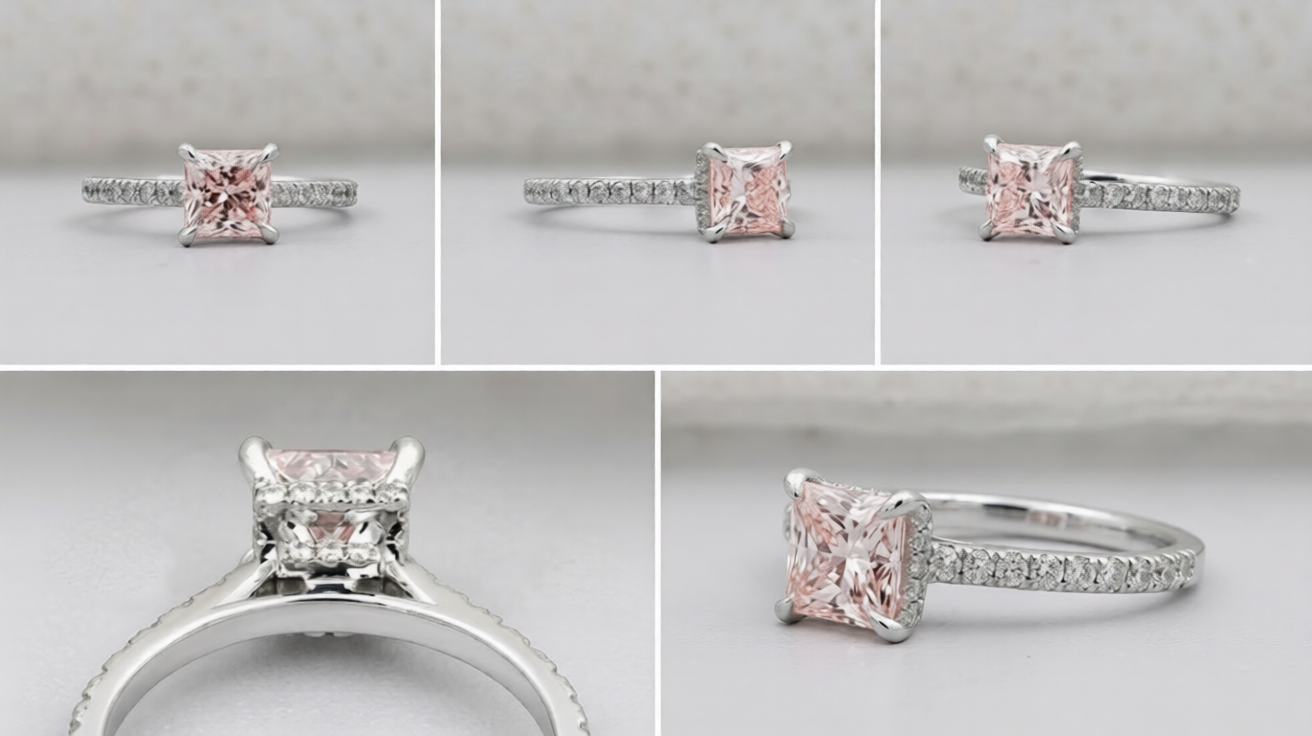
How Jewelers Perfect the Craft of a 10 Carat Diamond Ring
Behind every masterpiece of monumental fine jewelry lies an unseen world of high-stakes engineering, rigorous mathematical planning, and extreme artisan patience. While the consumer sees a finished piece of breathtaking beauty resting effortlessly in a velvet box, the journey to create that object is a grueling test of human skill. When a gemstone achieves a significant, double-digit volume, the entire production process must be completely reinvented. Standard manufacturing techniques, factory molds, and automated polishing setups are entirely useless at this elite tier of luxury.
To manipulate a center stone of such immense proportions, a jeweler must transition from a traditional craftsman into a high-level architect and structural engineer. Every microscopic decision made during the cutting and mounting phases carries massive financial and physical consequences. A single degree of miscalculation in facet alignment can completely destroy the gem's internal light return, while a minor oversight in metal thickness can result in a structural failure that compromises the safety of a historic asset. Perfecting this craft requires a flawless marriage of old-world hand skills and state-of-the-art digital technology, ensuring that the finished creation achieves an ultimate harmony between grand physical presence and a weightless, timeless aesthetic.
The Mathematical Precision of Micro-Facet Architecture
The journey to perfecting a monumental ring begins long before precious metals are ever melted down. It starts on the cutting wheel, where a master lapidary faces the daunting challenge of sculpting an immense rough crystal structure. In conventional, smaller jewelry components, light behavior is highly forgiving; rapid bursts of sparkle can easily mask minor structural variations or slight asymmetrical angles. However, when a gemstone expands into a massive double-digit weight profile, its face-up surface acts as a literal magnifying glass, exposing every single internal trait and facet junction to the naked eye.
To maximize the optical performance of a massive stone, the lapidary utilizes advanced computer-aided software to plot out a complex three-dimensional roadmap of the crystal before making a single incision. The planner must carefully analyze the internal stress points of the rough material to determine the ideal orientation of the facet grid. The ultimate goal is to optimize the stone’s fire—the spectacular division of ambient white light into a vibrant, rainbow-colored spectrum—and its scintillation.
During the actual polishing phase, the artisan moves with microscopic deliberation. The stone is pressed against a diamond-infused spinning wheel by hand, relying heavily on years of muscle memory and acute auditory feedback to feel the vibration of the stone. Each facet must be cut at exact mathematical angles relative to the pavilion and table to prevent the formation of an optical "window"—a dull, lifeless dead zone in the center of the gem where light slips through the bottom rather than bouncing back up to the viewer. This painstaking layout process can take several weeks or even months of continuous labor for a single gem, ensuring that the final stone behaves like a dynamic theater of light that commands attention across an entire room.
A heavy carat weight provides an expansive amount of facet real estate, meaning every single polished angle acts as a massive mirror. Achieving a true mirror-like finish on such a large surface area requires an incredibly steady hand and extended polishing cycles to eliminate microscopic friction lines. To explore beautiful gemstone-inspired collections and modern jewelry craftsmanship, visit:
https://www.antiquecut.com/blogs/education/10-carat-diamond-ring
The Structural Physics of Balance and Center of Gravity Engineering
Once an optically flawless center masterpiece has been successfully brought to life, the structural challenge shifts directly into the hands of the master bench jeweler. Setting a monumental stone introduces a fascinating set of physical hurdles centered around leverage and anatomy. A significant center gem is inherently top-heavy, meaning that if it is placed onto a standard, generic ring band, the piece will constantly slide, tilt, and spin uncomfortably around the wearer's finger during basic daily hand movements.
To overcome this, elite designers treat the mounting process as a custom architectural project. The jeweler must carefully calculate the center of gravity of the entire assembly. This is achieved by micro-sculpting a bespoke under-gallery or basket that sits as flush as humanly possible to the skin of the finger. By lowering the physical mounting profile, the artisan reduces the pendulum effect of the heavy stone, ensuring it remains perfectly centered and stable during wear.
The anatomy of the ring shank itself requires deep structural engineering. Modern master jewelers frequently utilize a precisely tapered shank that starts slightly wider and thicker at the base of the finger to act as a counterweight, before narrowing elegantly as it rises to meet the central gallery. This structural contouring creates a stunning visual frame that accentuates the immense scale of the center gem while maintaining a sleek, light, and modern aesthetic. Every angle of the inner metal rim must be polished to a silky, comfort-fit curvature, transforming a massive and intimidating piece of hardware into an incredibly comfortable extension of the body.
The Delicate Art of Securing Elite Girdle Boundaries
The definitive test of a bench jeweler's mastery occurs during the final phase of assembly: pressing the precious metal prongs over the stone's delicate edge. When working with a gemstone of extraordinary volume, the amount of physical pressure required to bend solid platinum or gold columns over the perimeter is immense. If the setter applies a fraction too much force or positions the tool at an incorrect angle, the metal can pinch the stone’s thin girdle boundary, causing microscopic fractures that could compromise the entire crystal structure.
To minimize this risk while achieving a clean look, modern master craftsmen have moved away from bulky traditional baskets in favor of minimalist wire galleries and elegant compass prongs. The jeweler meticulously cuts tiny, custom notches called "seats" into the interior of each individual prong using a high-speed miniature burr. The stone must slide into these seats with absolute mathematical perfection, ensuring that the weight of the gem is distributed completely evenly across all support pillars.
For consumers and collectors who want to successfully understand this highly technical creation process before acquiring an iconic heirloom, expanding your technical knowledge regarding certificate metrics, mounting physics, and metal durability is an incredibly vital step. To observe how top-tier bench jewelers execute these complex assemblies to ensure lifelong durability without blocking the clean path of ambient light, buyers can explore 10 carat diamond gold ring configurations to analyze the precise engineering benchmarks used today. Gaining this deep structural insight ensures that your final choice functions not only as a breathtaking statement of luxury but as a perfectly preserved, structurally flawless masterpiece that remains completely secure to wear for generations.
Bespoke Innovation: Merging Modern Tech with Time-Honored Hand Skills
The modern benchmark for achieving absolute perfection in grand-scale jewelry is defined by the seamless combination of cutting-edge technology and authentic human artistry. The contemporary custom journey completely rejects the unpredictable results of old-world guessing, replaces flat paper sketches, and embraces advanced three-dimensional digital modeling.
Before a single ounce of precious metal is ever cast into a furnace, visionary luxury design institutions like Antiquecut utilize highly specialized design software to generate hyper-realistic digital renderings of the ring structure down to the exact fraction of a millimeter. This digital phase allows the jeweler and the client to collaborate directly, adjusting the height of the central gallery, fine-tuning the thickness of the support prongs, or embedding subtle hidden accent details inside the bridge work.
This physical prototype allows the master bench jeweler to physically test the fit of the center gem and verify the balance mechanics before executing the final cast. After the precious metal structure is cast, the digital process concludes, and the traditional human hand takes full control. Elite master artisans spend dozens of hours hand-filing, setting every microscopic accent stone under high-power microscopes, and executing multi-stage polishing sequences to achieve a mirror-like finish.
Conclusion
Perfecting the craft of a monumental fine jewelry piece is a beautiful celebration of human ingenuity, patience, and unyielding discipline. Transforming a massive raw crystal into a perfectly balanced, breathtakingly brilliant ring requires a level of talent that transcends ordinary commercial manufacturing.
By understanding the unique way light behaves across an expanded surface canvas, calculating complex center-of-gravity physics, and executing flawless hand-setting techniques, elite master jewelers are able to push the absolute limits of what is possible in luxury design. These magnificent, tailor-made creations stand completely independent of transient seasonal fashion trends. They remain the ultimate expressions of historic personal milestones, enduring love, and a sophisticated legacy of style that will continue to hold the world spellbound for centuries to come.









0 Comments